Case File 063: The Patch of Perpetual Pumpkin Projects
Filed Under: Harvest‑Season Headaches & Gourd‑Based Gridlock

I sat down at my desk with my morning coffee and opened the project dashboard, only to find it sprawling across the screen like a pumpkin vine that had climbed out of control.
A business owner reached out because her projects were tangled in the same way — growing fast, crossing lines, and sprouting costs in places they didn’t belong.




Figgy’s note: “If your projects look like a pumpkin patch, someone skipped the labeling.”

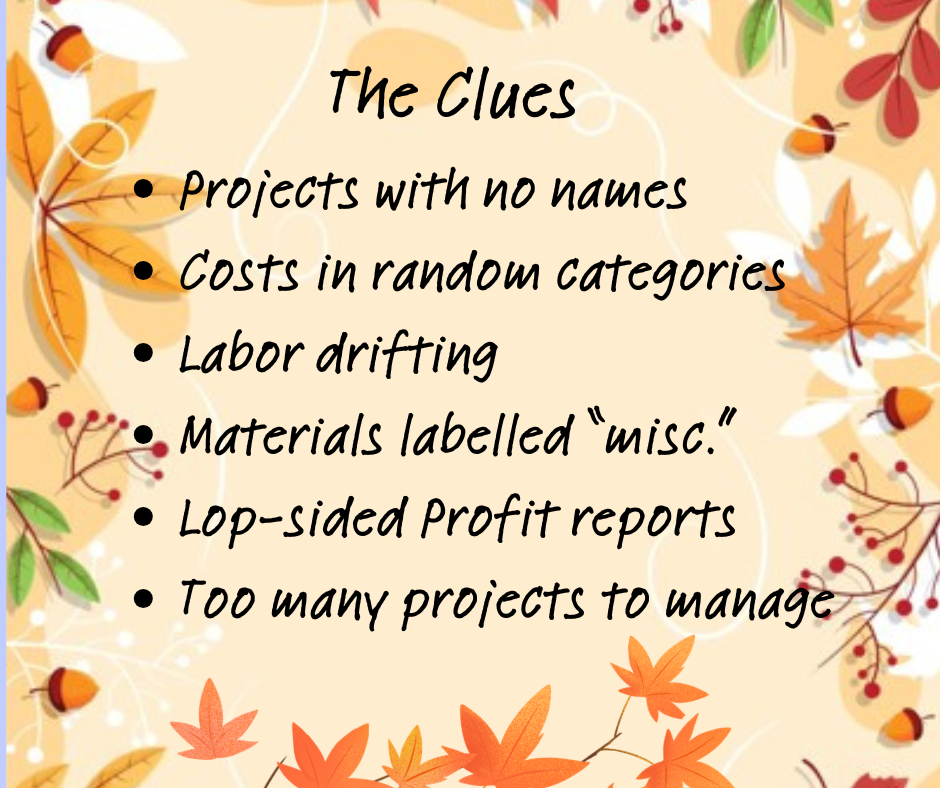
Clues
Projects created without names or scopes
Costs scattered across random categories
Labor drifting like runaway vines
Materials buried under “miscellaneous”
Profit reports shaped like lopsided gourds
A patch so overgrown it needed pruning, not guessing
One project gets set up halfway. Another gets started without a budget. A third gets tracked “later.” A fourth gets forgotten entirely.
Suddenly the books are full of half‑formed gourds, tangled vines, and expenses that don’t know where they belong.
The numbers aren’t wrong. They’re just lost in the patch.
It’s the bookkeeping equivalent of a pumpkin field where every vine crosses three others and nobody knows which pumpkin belongs to which plant.

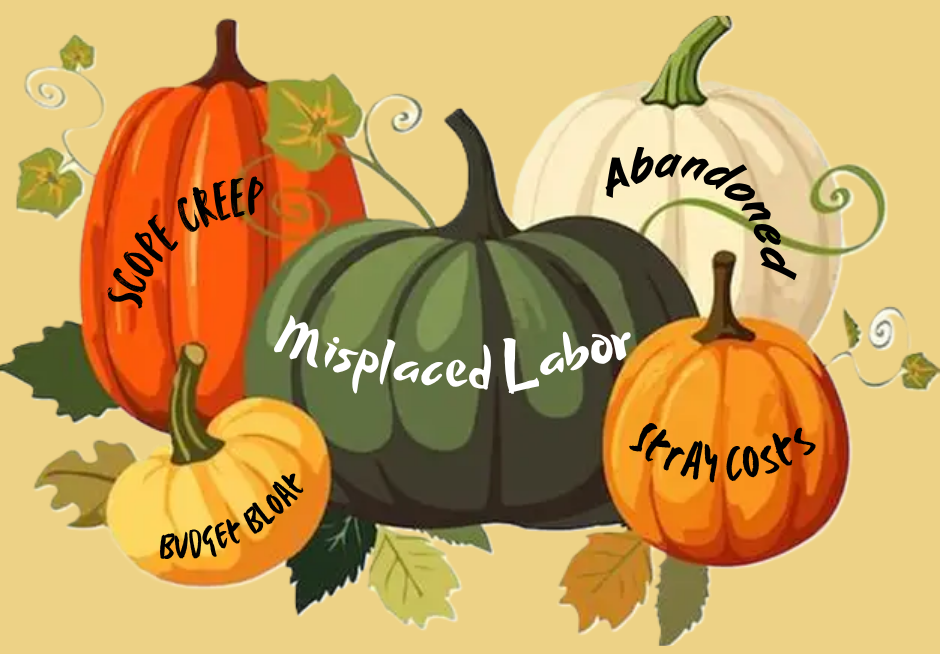
Detective Debit’s Fix
I grabbed my metaphorical gardening gloves and got to work.
First, I labeled the gourds:
Identified every active and abandoned project
Added clear names, scopes, and timelines
Sorted costs into proper buckets
Assigned labor and materials to the right vines
Flagged anything that didn’t belong in the patch


Then I pruned the vines:
Removed duplicate expenses
Reassigned stray transactions
Cleaned up “miscellaneous”
Rebuilt project reports with accurate data
Checked profitability for each pumpkin in the field


Figgy’s Thought:
“Turns out the patch wasn’t haunted — it just needed a gardener.”
Slowly, the patch took shape. The vines separated. The pumpkins stood on their own. The reports finally made sense.



The Twist
Pumpkin patches don’t get messy overnight — they creep.

The Takeaway
A clear project workflow helps you:
Track costs accurately
Prevent scope creep
Understand true profitability
Keep labor and materials organized
Avoid seasonal chaos
Grow pumpkins — not problems

Figgy adds: “Every project needs a tag. Even the tiny gourds.”


Need Backup?
A solid project setup keeps your financial patch tidy. When every job has a name, a scope, and a place to put its costs, the vines stay manageable and the harvest stays profitable.
If your projects are sprawling across your books, it’s time to prune the patch and restore order.



Final Thoughts
Projects thrive when they’re tracked with intention. When the patch is organized, the business grows without tangles.
Growth is good. Managed growth is even better.


Figgy’s final word:
“Label your pumpkins — the detective is carving.”

Case File 064: The Great Gourd Job Costing — where half‑carved jobs reveal hollow profits, and Detective Debit has to scoop out the truth.