
Special Investigation: The Cleanup Con
Filed under: Tempting Fees, Hidden Traps


Five years of books. Four accounts. Three hundred transactions a month. A prospect promises to pay double your fee and says it will all be worth your time. The paperwork looks thin; the timeline looks tight… but the offer seems irresistible.


Figgy sniffs the air:
“Something doesn’t smell right … they really haven’t filed taxes since 2020?

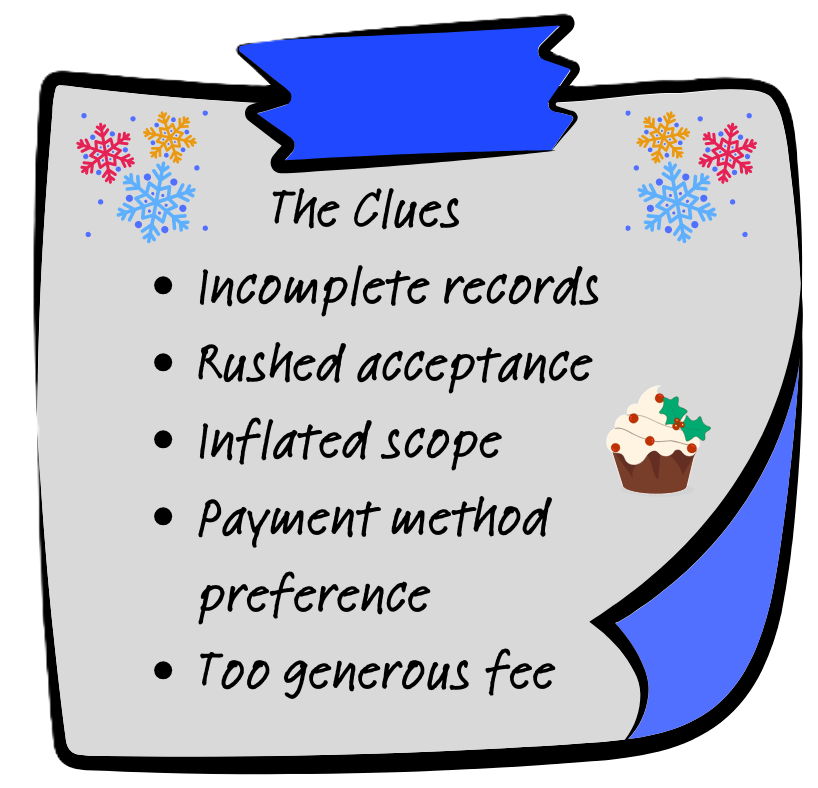
The Clues
Incomplete records: only a handful of statements provided.
Rushed acceptance: quote accepted immediately, no contract signed.
Inflated scope: five years of cleanup, but details don’t add up.
Payment method preference: ACH deposit but stays “pending” long‑term.
Too generous fee: higher than standard rates for basic services.
The “deposit” never clears. The prospect suddenly changes their mind and requests a refund.
What looked like a lucrative project was actually a fleece disguised as a windfall.
The promise of double fees was bait; the real play was to trap you in hours of unpaid cleanup, then vanish with your time and energy.
The ledger tells the truth: when the money never arrives, the offer was never real.
Detective Debit’s Fix
Phantom deposits are the oldest trick in the book. Guard against them by verifying funds before lifting a finger.
Wait until payments clear, and insist on contracts that spell out deposits, refunds, and scope.


Track balances like a hawk:
if the balance sheet doesn’t move, neither should you.
Detective Debit’s rule of thumb? No cleared cash, no case file.



The Twist: The Con Revealed


Takeaway: Lessons from the Case
Verify deposits: never refund until funds are fully cleared by your bank.
Flip the script: if pressured, require proof of cleared payment — scammers won’t deliver.
Contracts first, deposits second: sequence protects both sides from fraud.




Sometimes the biggest mess isn’t in the books—it’s in the client’s story. Not every “deposit” is what it seems, and urgency is often the biggest red flag.
The safest move is to stay on offense: make the payer prove funds cleared before you even consider a refund.
The best firewall isn’t just intuition—it’s process. Signed contracts first, verified payments second. That’s how you keep your books, and your business, secure.


Case File 026: Subscription Sneak Attacks
Recurring charges hiding in plain sight? Detective Debit spotted the leaks, and Figgy flicked her tail: “Cancel the noise, keep the signal.” Subscription creep drains cash flow one unnoticed charge at a time.